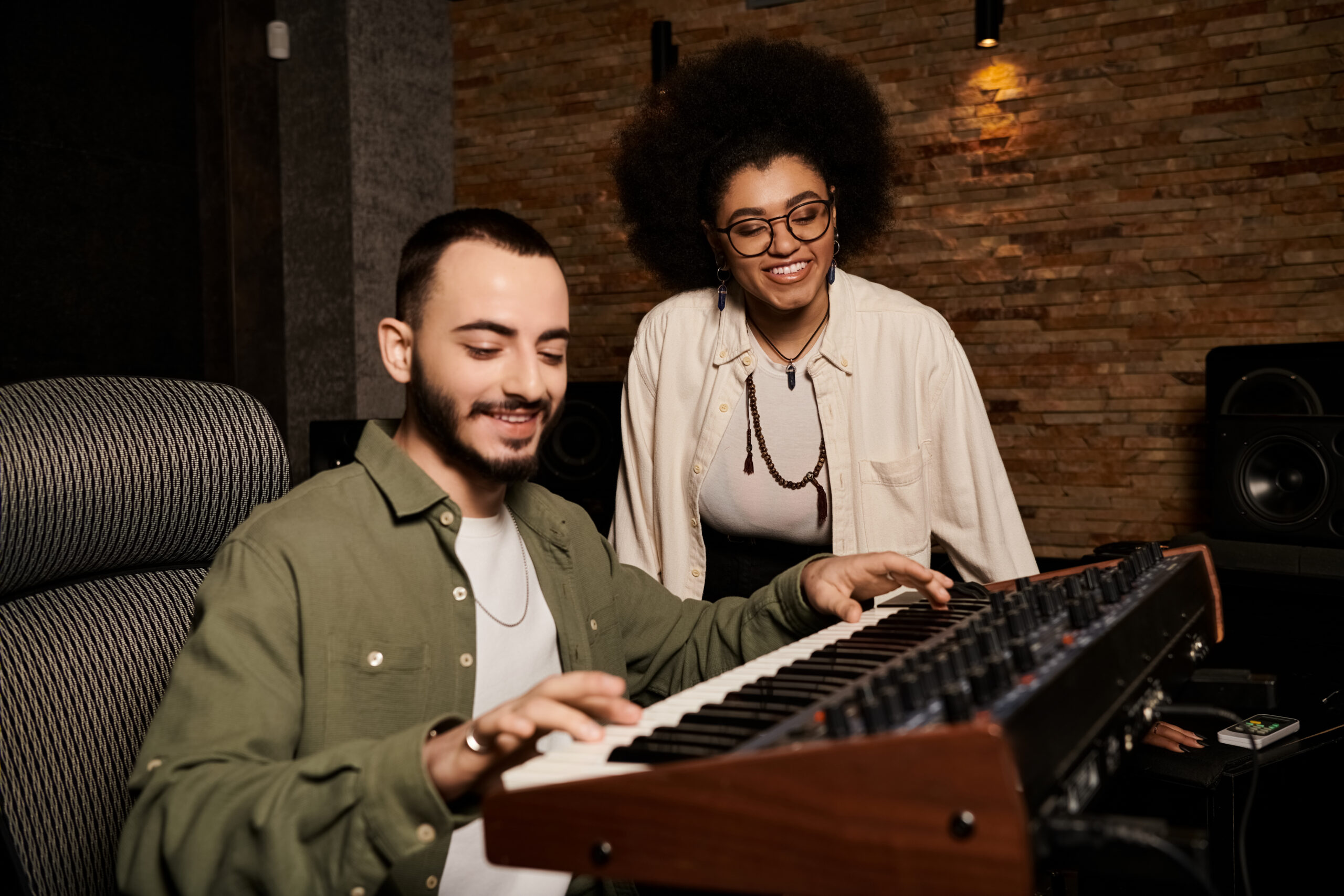
Music has always been a collaborative art, but in today’s world, the opportunities for collaboration extend far beyond the musicians on stage. Working with composers, visual artists, and choreographers can transform a concert from a simple performance into a fully immersive experience. For me, this kind of collaboration is at the heart of what makes music alive and relevant. It allows us to explore new ways of communicating emotion, story, and meaning, engaging audiences in ways that go far beyond sound alone.
Working with Composers
Collaboration often begins with the composer. A piece of music is a living work, and understanding the composer’s vision is crucial. I spend time discussing the structure, themes, and emotional arc of each composition. These conversations inform how the music can interact with other elements. Composers bring ideas that can inspire visual interpretations or choreographed movement. In many cases, the composer is also involved in the multimedia aspects, creating a dialogue between sound and image from the very beginning. This integrated approach ensures that every element of the performance serves the music.
Bringing Visual Art to Life
Visual artists add an entirely new dimension to music. Projections, video, and light design can highlight patterns in the music, emphasize mood, or tell a parallel story. At ENSEMBLE / PARALLAX, we strive to make sure the visual components are created specifically for each piece. The goal is not to distract from the music but to amplify it. When a visual artist works closely with both the composer and the conductor, the result is a cohesive experience. I have seen audiences respond in ways that are both emotional and intellectual, noticing connections between sound and image that might have gone unnoticed in a traditional concert setting.
Choreography and Movement
Adding choreography or dance introduces another layer of collaboration. Movement can mirror the music, provide contrast, or create tension. It gives the audience a physical representation of abstract musical ideas. Choreographers often work with the composer to understand timing, phrasing, and emotional intent. At the same time, the conductor and dancers must find a shared rhythm, creating a sense of flow that feels natural rather than forced. When done successfully, dance transforms the concert hall into a space where music, motion, and emotion are inseparable.
Creating a Shared Vision
The key to successful collaboration is creating a shared vision. Each artist brings their own expertise and perspective, and it is the conductor’s role to unify these ideas. This requires patience, communication, and mutual respect. I encourage my collaborators to experiment and take risks, while also ensuring that the music remains the central focus. The most memorable performances often come from a place of trust and openness, where each artist feels empowered to contribute their voice to a collective story.
Engaging the Audience
Collaboration has a profound impact on how audiences experience a concert. When music is paired with visuals and movement, it becomes more accessible and engaging. People are drawn in not only by what they hear but by what they see and feel. This multi-sensory approach allows audiences to experience the music in new ways, deepening their connection to the performance. I have seen audience members lean forward in rapt attention, moved not just by the notes but by the way the entire stage comes alive.
Lessons from Experience
Over the years, I have conducted concerts around the world where collaboration has transformed the experience entirely. In Paris, a multimedia piece allowed the visuals to respond in real time to the orchestra, creating a living conversation between musicians and images. In Italy, choreographed movement brought contemporary music to life in a way that words alone could not describe. Each experience reinforced the idea that music reaches its full potential when it exists in dialogue with other art forms.
Challenges and Rewards
Collaborative performances are not without challenges. Timing must be precise, technology must function seamlessly, and all participants must be attuned to each other. These performances demand more rehearsal and coordination than traditional concerts, but the rewards are immense. Audiences remember the emotional impact, the sense of being fully immersed, and the feeling that they are part of something larger than a simple performance.
A Vision for the Future
Looking forward, I believe collaboration between composers, visual artists, and choreographers will continue to redefine concert experiences. As technology evolves, we can explore new ways of integrating sound, image, and movement. Virtual reality, interactive projections, and responsive stage design will open doors to performances that are unique and transformative. The potential for experimentation is limitless, and the most exciting part is seeing how artists continue to push the boundaries of what a concert can be.
Collaboration as a Path to Innovation
For me, collaboration is not just a technique; it is a philosophy. It reminds us that music is part of a larger artistic conversation. By working together across disciplines, we discover new ways to communicate, inspire, and connect with audiences. Each project teaches me something new, whether it is about timing, interpretation, or the emotional power of a shared artistic vision. The future of performance lies in collaboration, and I feel privileged to contribute to that evolution.