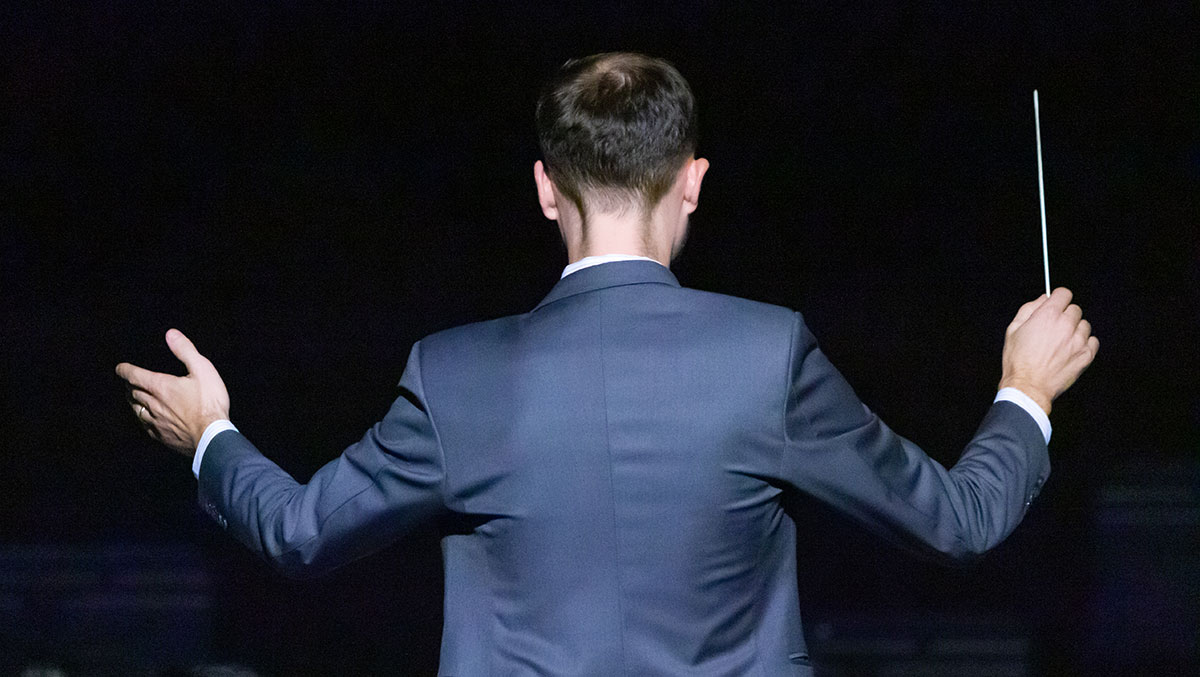
Teaching conducting has always been as much about philosophy as it is about technique. When I guide a student onto the podium, I am not only passing on the skills of beat patterns or cueing. I am sharing a lineage of musical thought, stretching back through my teacher Emilio Pomarico to Sergiu Celibidache, one of the greatest conductors of the 20th century. This approach has shaped my own career and my students’ development, emphasizing presence, memory, and an understanding of music that goes beyond notes on a page.
Learning from Celibidache
Celibidache’s influence on my teaching cannot be overstated. His performances were often called transcendental because he approached every piece as a living, breathing entity. Pomarico distilled these lessons into practical guidance, showing me that conducting is as much about understanding time, space, and energy as it is about technical precision. When I work with students, I encourage them to internalize the score completely, to feel the flow of music from beginning to end, and to explore how silence, tension, and pacing shape the overall experience.
Memory as a Tool
Conducting by memory is one of the most powerful tools a conductor can possess. It forces a deep internalization of the music and allows for a more responsive dialogue with the orchestra. I emphasize this practice with my students because it cultivates confidence, attentiveness, and a more natural connection to the ensemble. By learning every nuance of a score, from harmonic structure to phrasing, musicians can respond intuitively, creating performances that are fluid, expressive, and alive.
Philosophy in the Podium
An important part of my teaching is introducing students to philosophical ideas that influence performance. Celibidache and Pomarico incorporated both Eastern and Western philosophies, emphasizing mindfulness, presence, and the importance of being fully engaged with the music. I encourage students to reflect on how these principles can affect their approach to timing, gesture, and ensemble dynamics. Conducting becomes more than technique; it becomes a way to shape an experience that resonates with both musicians and audiences.
Integrating Contemporary Music
While teaching classical repertoire is essential, I also prioritize contemporary music. Students often find modern compositions challenging because they require a different kind of listening and interpretation. I draw on my experience conducting works by composers such as Georg Friedrich Haas, Pierre Boulez, and Toshio Hosokawa to guide students through complex rhythms, textures, and structures. Working with contemporary music teaches adaptability, precision, and openness to new sound worlds, skills that are invaluable for any conductor.
Multimedia and Performance
Another dimension I bring into teaching is the integration of multimedia. At ENSEMBLE / PARALLAX, every performance pairs music with visual elements created specifically for the compositions. I encourage students to explore how visuals, movement, or lighting can enhance musical storytelling. This interdisciplinary approach deepens understanding and encourages creativity. It also demonstrates that conducting is not isolated; it is a collaborative art that benefits from dialogue with other artists and media.
Preparing for the Real World
Teaching conducting is also about preparing students for the realities of professional life. I share lessons learned from leading orchestras in Europe and North America, from rehearsing in historic concert halls to touring with multimedia productions. Students learn that flexibility, patience, and the ability to inspire collaboration are just as important as technical skill. Every rehearsal is an opportunity to build communication, trust, and leadership—qualities that carry far beyond the podium.
Commissioning and Collaboration
I emphasize the importance of collaboration and commissioning new works. Introducing students to living composers allows them to see how music evolves and how their role as conductors contributes to the creative process. Collaborating on new compositions teaches problem-solving, interpretation, and innovation. It also connects students to a broader musical community, giving them perspective on how performance, composition, and audience engagement intersect.
Encouraging Personal Exploration
One of my primary goals as a teacher is to encourage personal exploration. Conducting is not about copying a style or following rigid rules. It is about developing a personal voice while respecting the music, the musicians, and the audience. I ask students to study a wide range of composers, from Bach and Beethoven to Haas and Hosokawa, and to explore interdisciplinary influences such as visual art or literature. This approach allows each student to cultivate their own aesthetic sensibility and develop an approach that feels authentic.
Sharing My Published Works
As part of understanding the breadth of conducting and composition, I also encourage students to engage with published music. My compositions are available through the American Composers Alliance, and they provide insight into how I approach structure, texture, and multimedia integration. You can explore my published works here: Farzinpour Music Collection. Studying these works alongside performance helps students connect theory with practice and see how contemporary compositions come to life.
Building the Next Generation
Teaching conducting is ultimately about building the next generation of musicians and leaders. By sharing technical skills, philosophical approaches, and collaborative practices, I aim to equip students with the tools they need to inspire audiences and create meaningful experiences. The podium is a place of responsibility, creativity, and transformation, and I consider it a privilege to guide students in discovering their own path in this art form.
The Journey Continues
Every lesson, rehearsal, and performance is a continuation of a long lineage of musical thought. From Celibidache to Pomarico and now to my students, the focus is on presence, understanding, and expressive depth. Conducting and teaching are intertwined for me, and each reinforces the other. The future of music depends on conductors who can combine technical mastery with philosophical insight, creativity, and collaboration. Sharing this knowledge is one of the most rewarding aspects of my career, and it is a journey that continues every day.