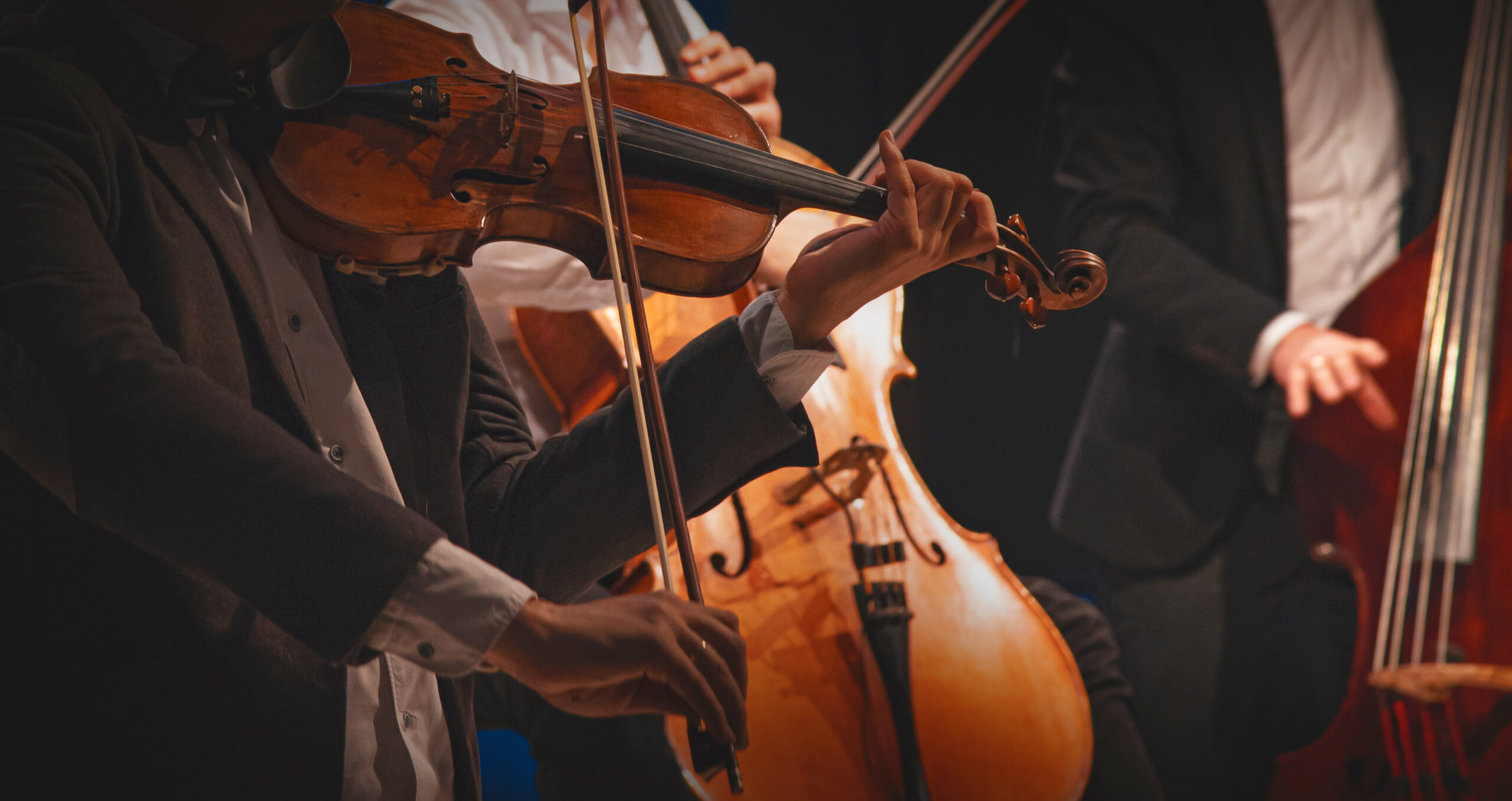
When I think about the future of music, what excites me most is the potential of multimedia to transform how we experience concerts. Music has always been about communication and connection, but today, thanks to technology, we can create experiences that engage audiences in ways that were impossible even a decade ago. For me, the intersection of music, visual art, and technology is not just a novelty; it is a vital part of the evolution of classical and contemporary performance.
Creating Immersive Experiences
At ENSEMBLE / PARALLAX, we have made it our mission to pair every musical work with a multimedia component specifically designed for it. This means that each composition is not simply performed; it is realized as an immersive experience. Video artists, choreographers, and designers collaborate with the musicians to create visual narratives that echo, contrast, or expand the music. When done well, it is a dialogue between senses. The audience is not just listening; they are seeing, feeling, and even moving with the performance.
Making Classical Music Accessible
Classical music has sometimes been criticized for feeling distant or inaccessible, but multimedia offers a way to bridge that gap. A well-designed visual element can provide context, highlight structure, or illuminate emotion in ways that make the music more relatable. At the same time, multimedia should never overshadow the music. The visuals exist to serve the sound, to enhance and deepen the experience rather than compete with it. Striking that balance is challenging, but when it works, it transforms the concert hall into a living, breathing space where every sense is engaged.
Expanding Possibilities in Contemporary Music
In contemporary music, multimedia has perhaps even greater potential. Many modern composers experiment with sound, texture, and form in ways that challenge traditional listening. Pairing these works with visual or spatial elements can help guide the audience, giving them a foothold in unfamiliar territory. It also opens doors for experimentation. I have worked on projects where projections respond in real time to the music, creating a feedback loop between musicians and visuals. The result is an ever-evolving performance that is different every night.
Multimedia as a Teaching Tool
Education is another area where multimedia can have a profound impact. As a professor, I have seen how integrating visual elements into lessons on composition, orchestration, or conducting helps students understand abstract concepts more clearly. Seeing sound translated into visual forms can reveal patterns and structures that might otherwise go unnoticed. It encourages students to explore how music interacts with space, light, movement, and narrative. In this way, multimedia is not just an addition to performance; it is a tool for deeper musical understanding.
Collaboration and Technology
Integrating multimedia into classical and contemporary performance requires careful planning and collaboration. Lighting, projection mapping, stage design, and technology must all work seamlessly with the music. Musicians must be aware of timing and spatial cues, and visual artists must understand the structure and phrasing of the score. It is a complex, collaborative process, but one that rewards dedication with performances that are memorable and emotionally resonant.
Looking Ahead
Looking to the future, I see even more exciting possibilities. Advances in virtual and augmented reality, interactive projection, and artificial intelligence will allow audiences to engage with music in ways we can only begin to imagine. Imagine a concert where each listener experiences a unique visual accompaniment tailored to their perspective, or a performance that extends into virtual spaces, inviting global audiences to participate simultaneously. These developments will challenge traditional notions of the concert hall, but they also promise to expand the reach and relevance of classical and contemporary music.
A Vision for the Future
At the core of all this is a simple principle: music is meant to be experienced, and the more senses we engage, the more fully we can connect with it. Multimedia is not a gimmick; it is an extension of the artistic vision. It allows composers, performers, and audiences to speak a richer language together. Every time we premiere a new work with a visual component, I am reminded of why I fell in love with music in the first place—the thrill of discovery, the power of collaboration, and the joy of sharing something that moves people in unexpected ways.
As an artist and conductor, I am constantly inspired by the possibilities that lie ahead. We are only at the beginning of what multimedia can bring to classical and contemporary music. If we approach it thoughtfully, respecting the music while embracing innovation, we can create concerts that are not just performances, but fully immersive experiences that engage the mind, heart, and senses. The future of music is multimedia, and I am thrilled to be a part of shaping it.